Channel City Children
Messages from My Father, Ray Ray's, Grass Roots, Glen Hall, Combine Kids

Welcome to my 171st weekly newsletter. This issue includes five worthless questions asked by sideline reporters, Calvin Trillin’s tribute to his father, a Columbus BBQ truck, a pop band that had 14 Top 40 hits, Mr. Goalie, and a couple of kids on a combine. I hope you like the picks and pics.
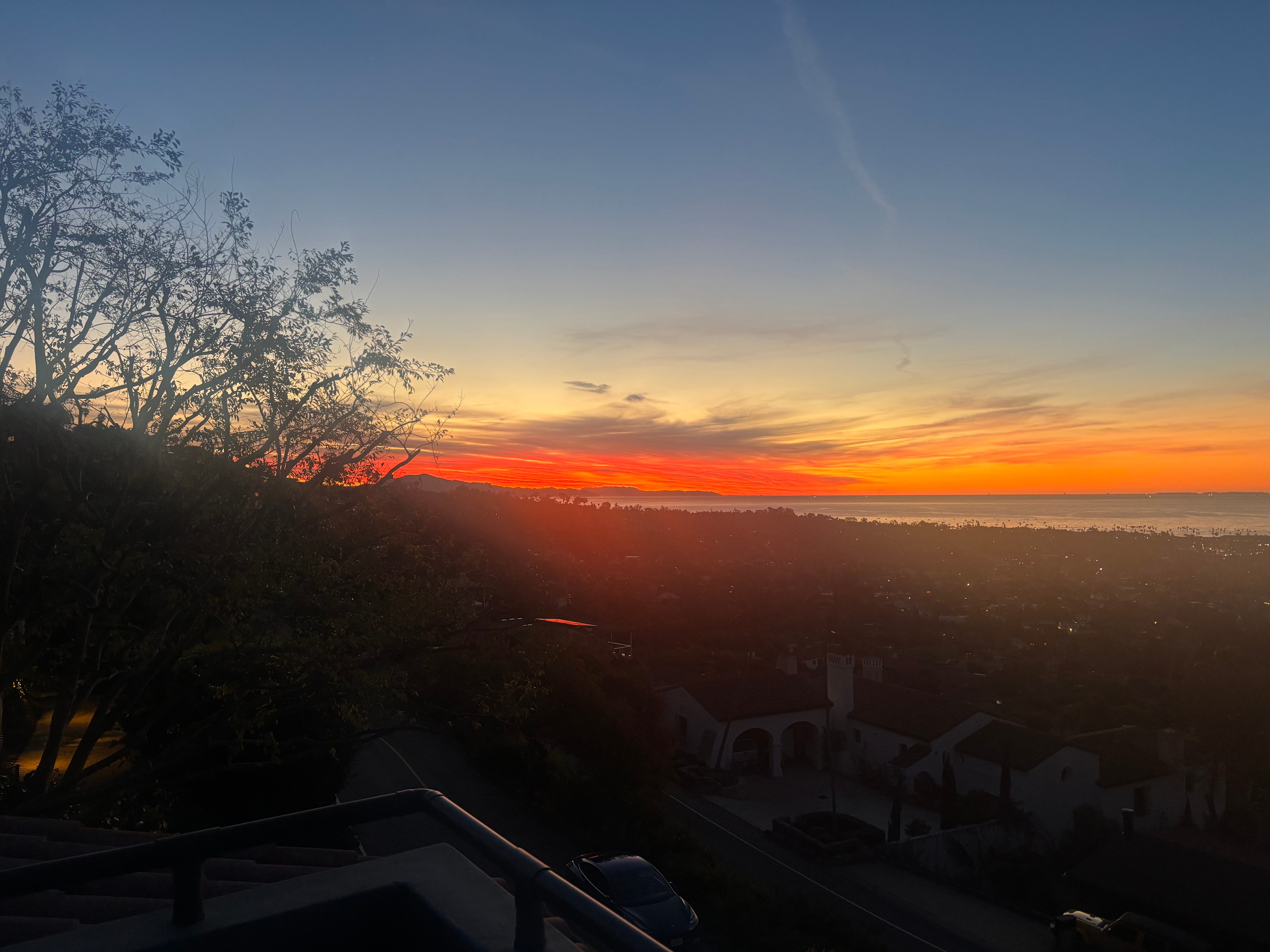
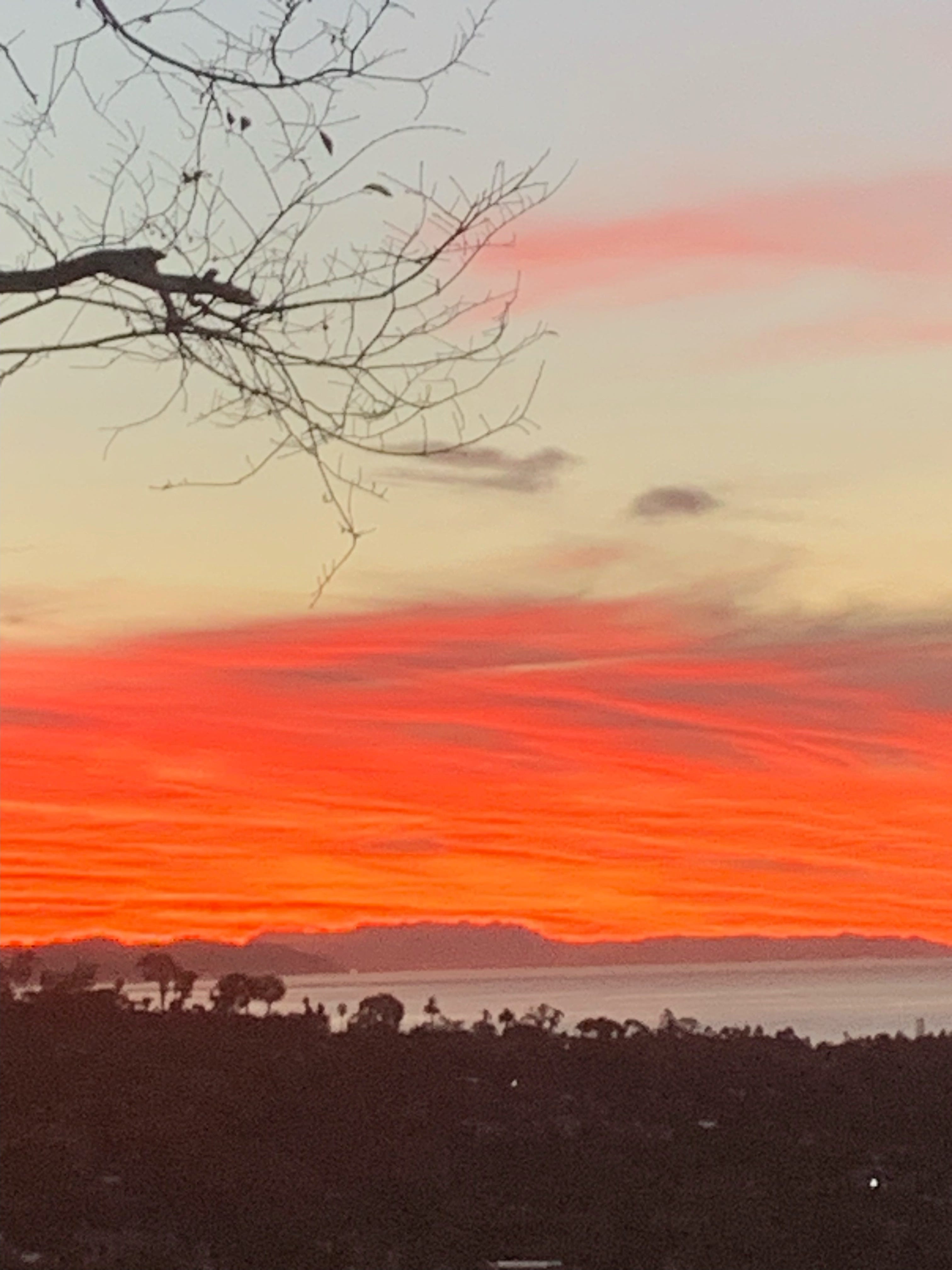
Santa Barbara is closely associated with the Santa Barbara Channel, which is why it’s called the Channel City, referring to its location on the channel separating the mainland from the Channel Islands. It’s also known as The American Riviera, and we are once again staying in the part of town known as the Upper Riviera. The sunrise views are spectacular from up here.
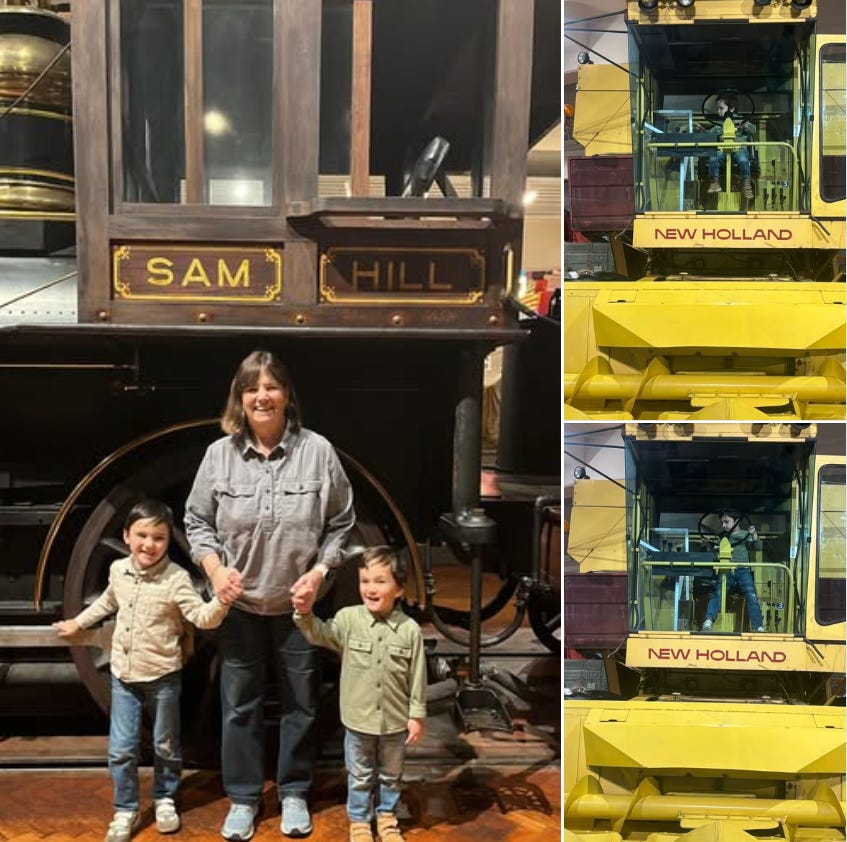
One of the main reasons we spend the winter here is to be able to see two of our grandsons every day. Noah and Julian are the Channel City Children.
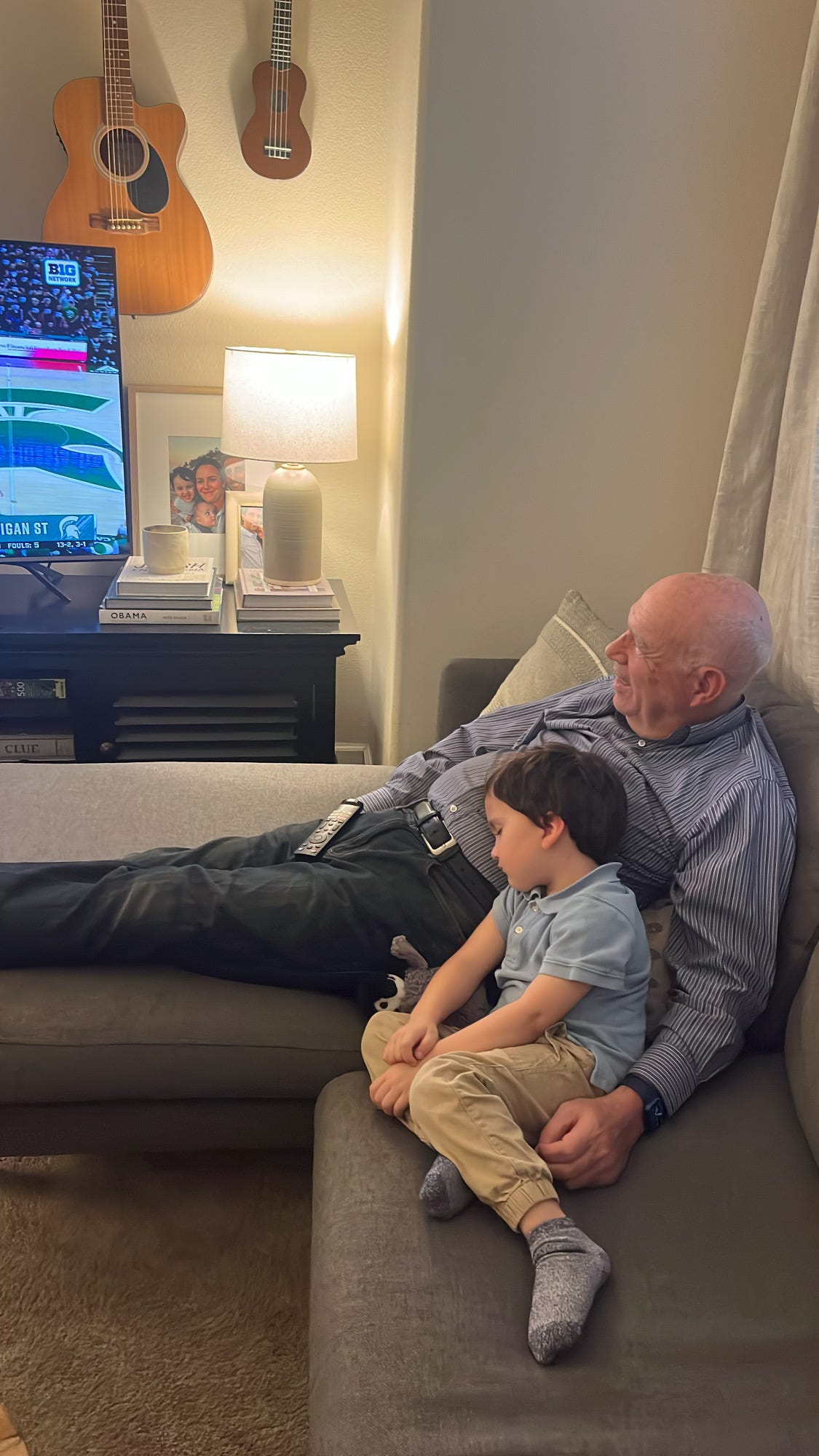
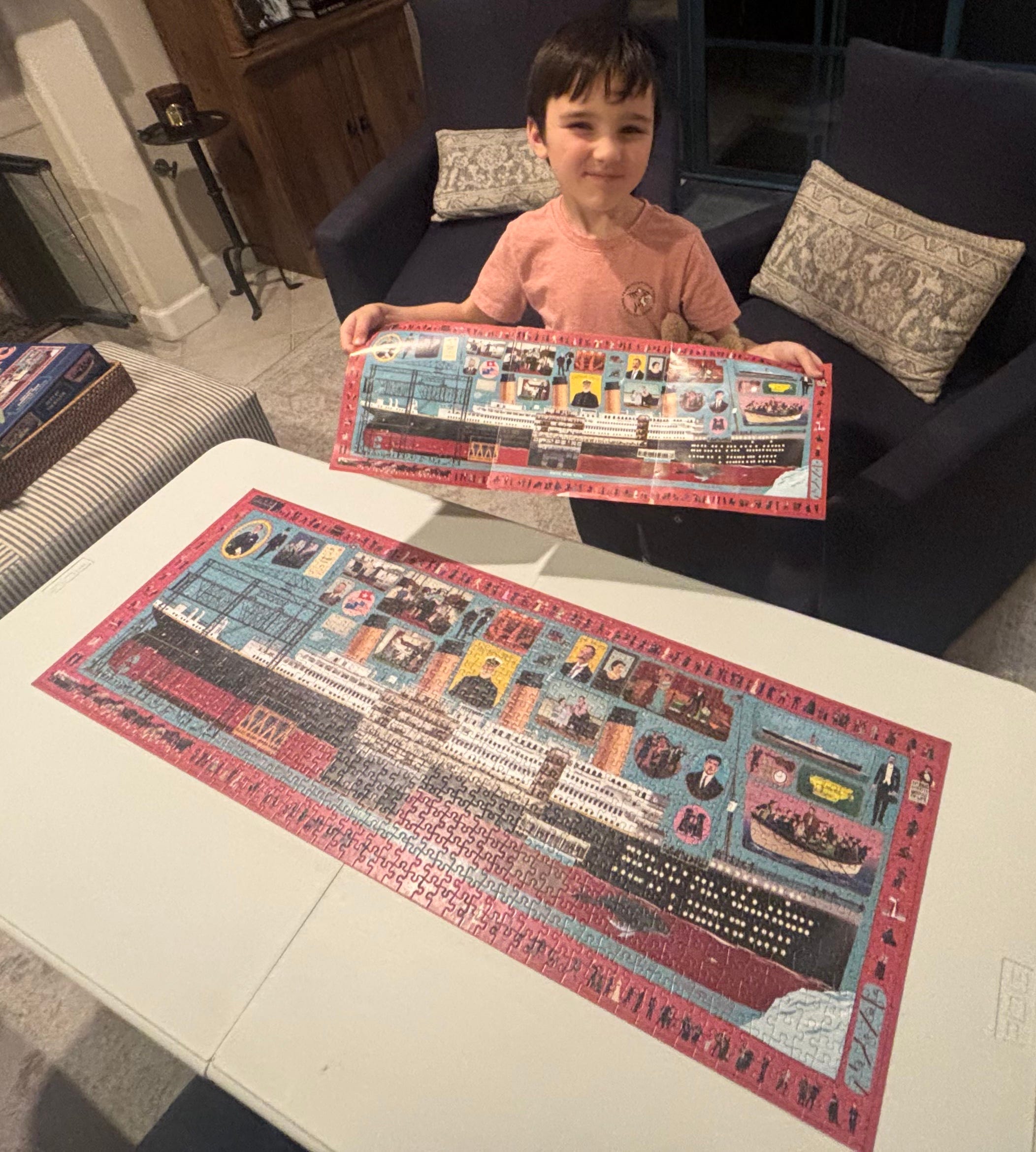
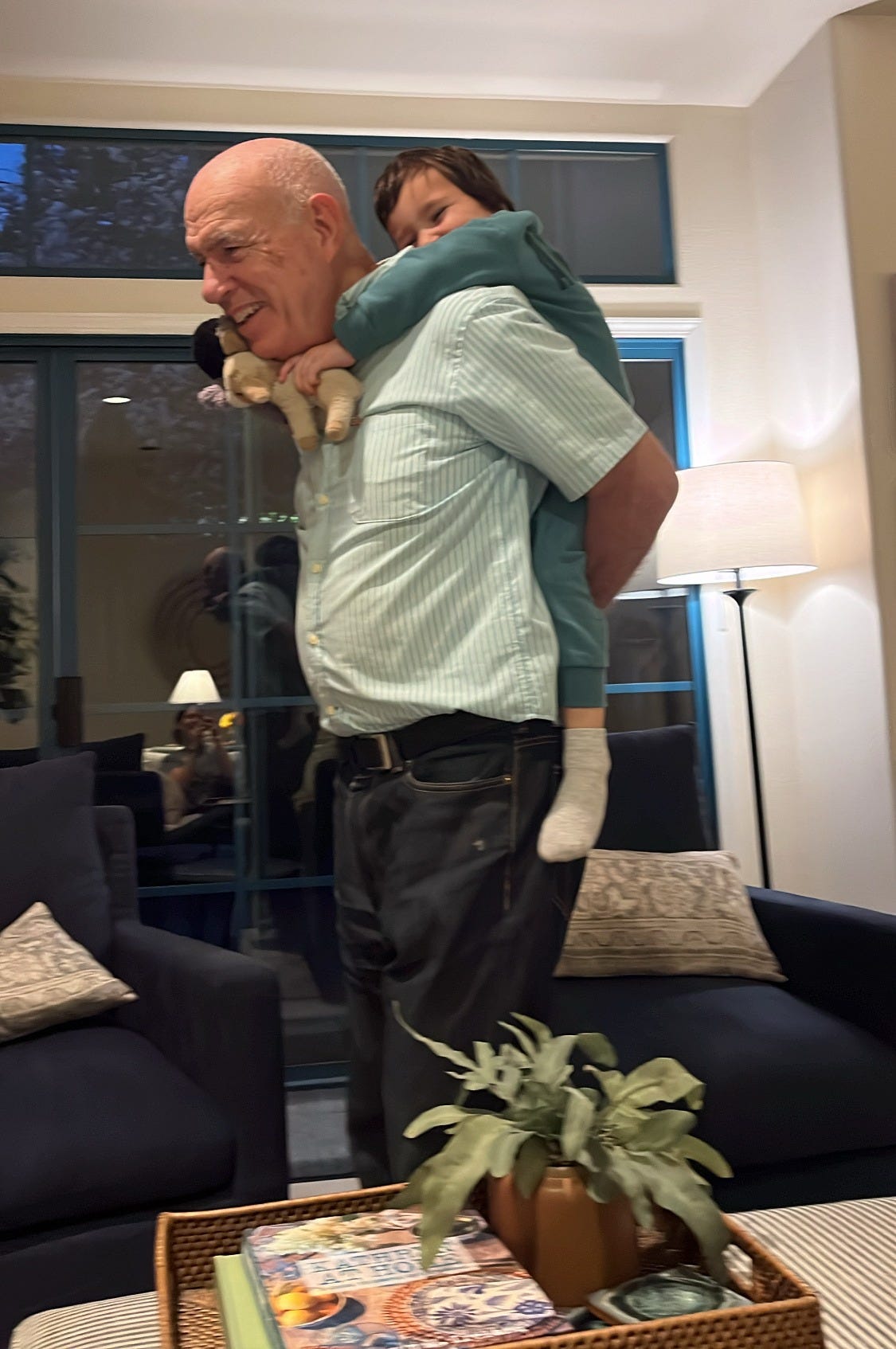
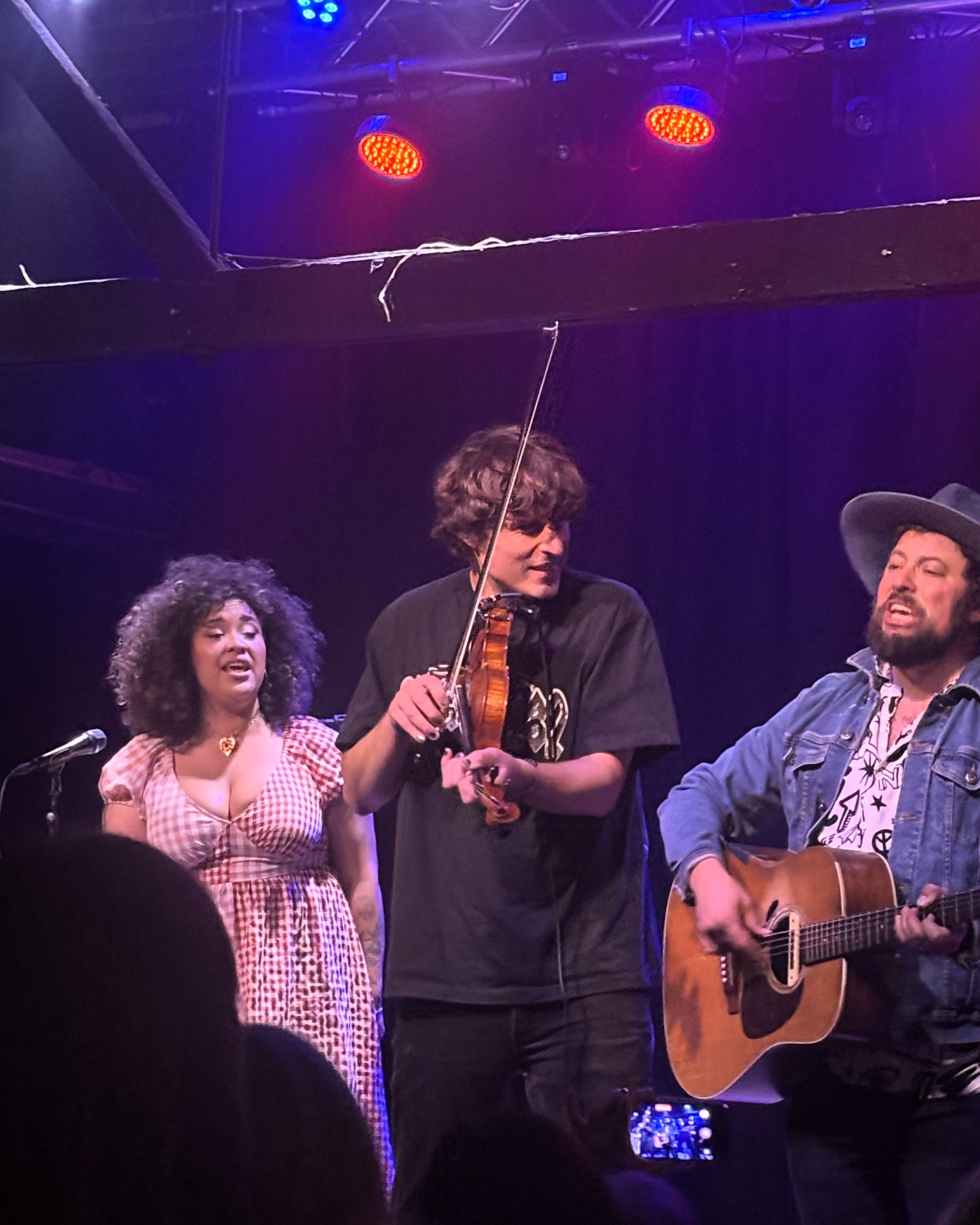
On Friday we saw Dustbowl Revival at SOhO Restaurant & Music Club. Our friends Barbara and Ben Eisley were also there, and told me that they were the ones who introduced the band to our mutual friends, Barbara and David Osher, who did the same for us. I loved the band’s lively cover of When Will I Be Loved, an Everly Brothers song later covered by Linda Ronstadt.
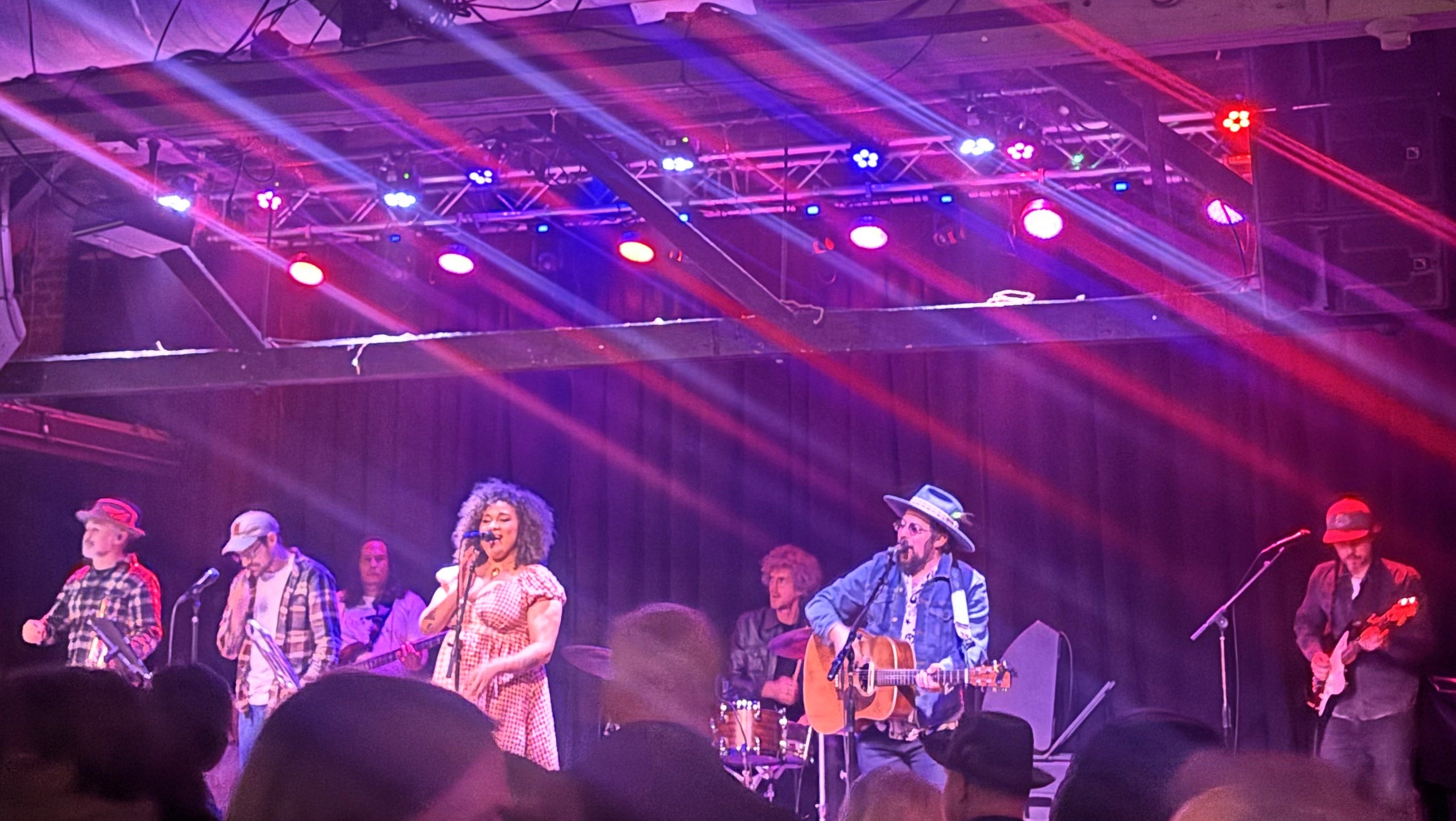
Each of the three times we have seen the band perform they have had a different woman singing with them.
I was previously unaware of the legacy I had built with a New Hampshire company until receiving this email:
From: Shivek Gupta
Date: Mon, Jan 12, 2026 at 3:45 PM
Subject: Strategic interest in Garfield Pest ControlHi Stan,
I’m Shivek Gupta, a former operator who built and scaled a $25M service company. I’m now looking to acquire a pest control business.
I’d love to hear your story and see if there’s an opportunity to acquire Garfield Pest Control and continue the legacy you’ve built. Would you be open to a quick chat?
PS: I’m generally looking for businesses in the $10M–$80M revenue range.
Best,
Shivek Gupta
Founder, Brightside Legacy

If you enjoy Fave Five, please share it with your friends who also like books, food, music, sports, or humor. To do so, just click the button below.
Fave Five 171: Channel City Children
Trillin’s Tribute (Messages from My Father), Food Truck Finale (Ray Ray’s), Let’s Live (Grass Roots), Glen the Goalie (Glen Hall), and Combine Kids.
Fave Five List: Bad Sports Interview Questions
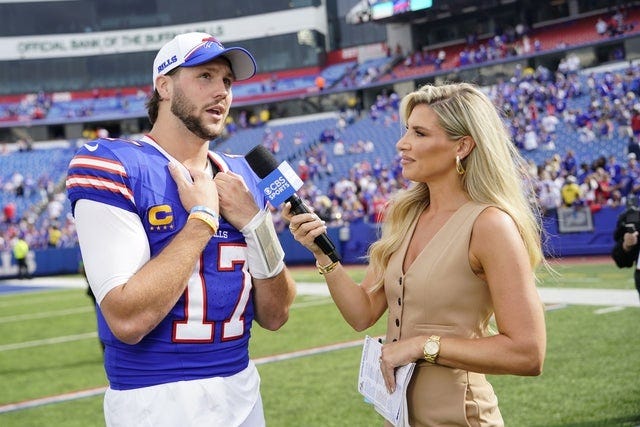
I watch a lot of sports on TV, and I am always bothered by the same, lame questions posed to players and coaches by sideline reporters. Instead of asking questions that I would want to ask and might offer some valuable insights, they all ask the same predictable ones:
How were you able to build such a big lead? We scored a lot and they didn’t.
What are you feeling in this moment? My left leg is killing me.
Take me through your last at bat. I swung at the pitch and hit it.
Talk to me about that shot. It went in.
What do you need to do differently in the second half? Play better.
Book Best Bet
Messages from My Father by Calvin Trillin
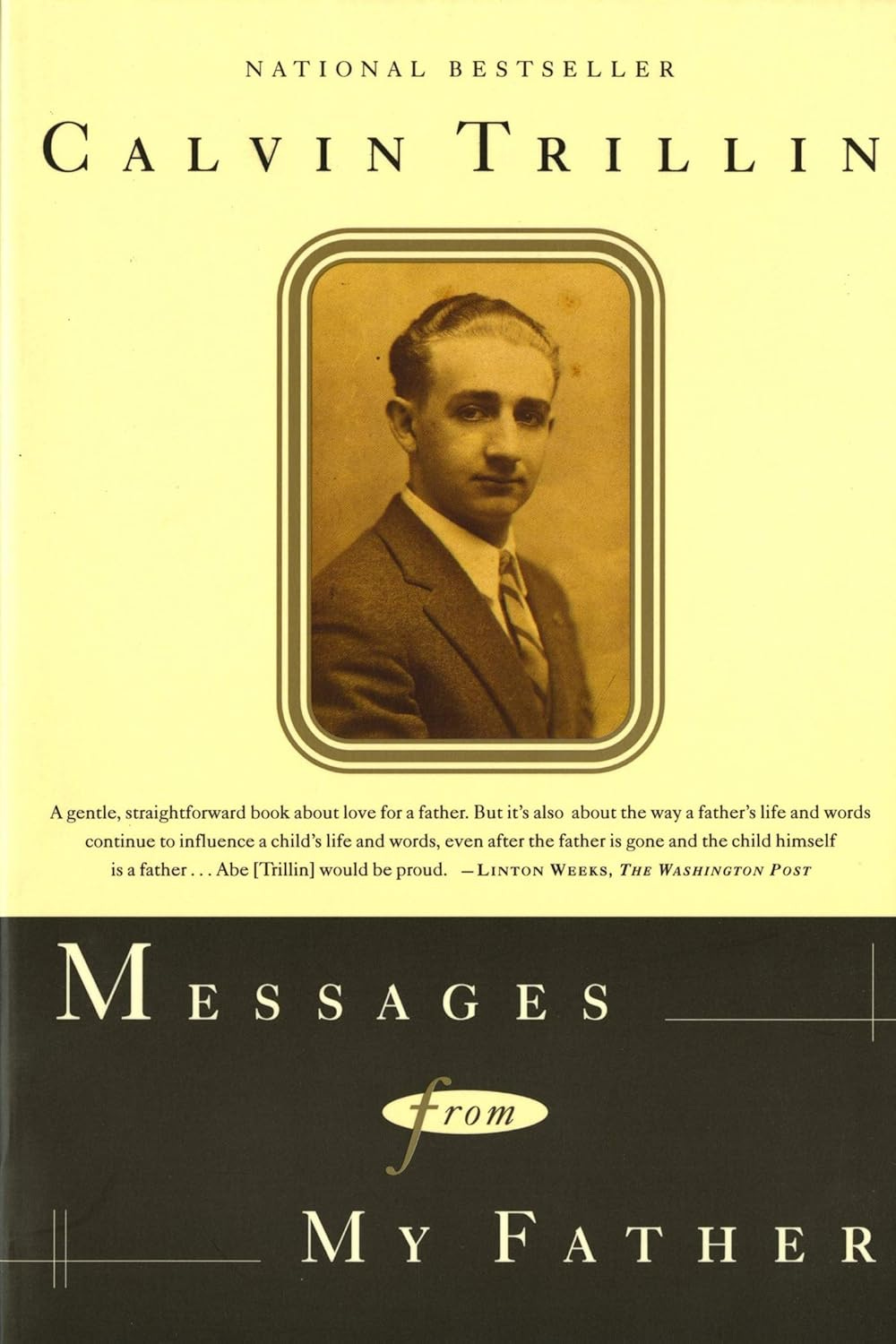
I previously featured American Fried by the same author. As a fan of his work, I was interested in this memoir about his dad.
From Amazon: Calvin Trillin, the celebrated New Yorker writer, offers a rich and engaging biography of his father, as well as a literate and entertaining fanfare for the common (and decent, and hard-working) man.
Abe Trillin had the western Missouri accent of someone who had grown up in St. Joseph and the dreams of America of someone who had been born is Russia. In Kansas City, he was a grocer, at least until he swore off the grocery business. He was given to swearing off things―coffee, tobacco, alcohol, all neckties that were not yellow in color. Presumably he had also sworn off swearing, although he was a collector of curses, such as "May you have an injury that is not covered by workman's compensation." Although he had a strong vision of the sort of person he wanted his son to be, his explicit advice about how to behave didn't go beyond an almost lackadaisical "You might as well be a mensch." Somehow, though, Abe Trillin's messages got through clearly.
The author's unerring sense of the American character is everywhere apparent in this quietly powerful memoir, Messages from My Father.
Restaurant Recommendation
Ray Ray’s Hog Pit 2355 W Dublin-Granville Rd, Columbus, OH 43235 (no longer there)
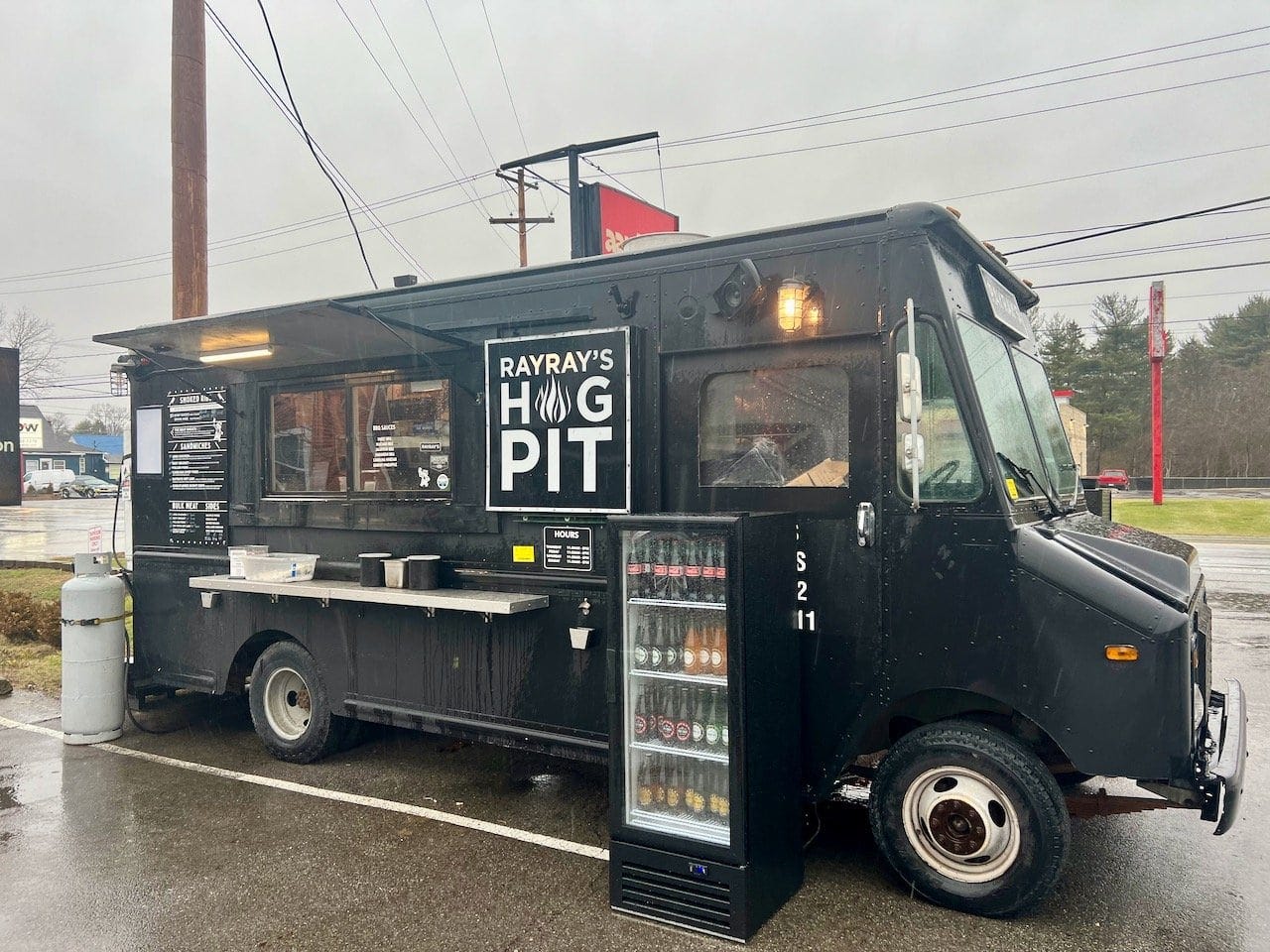
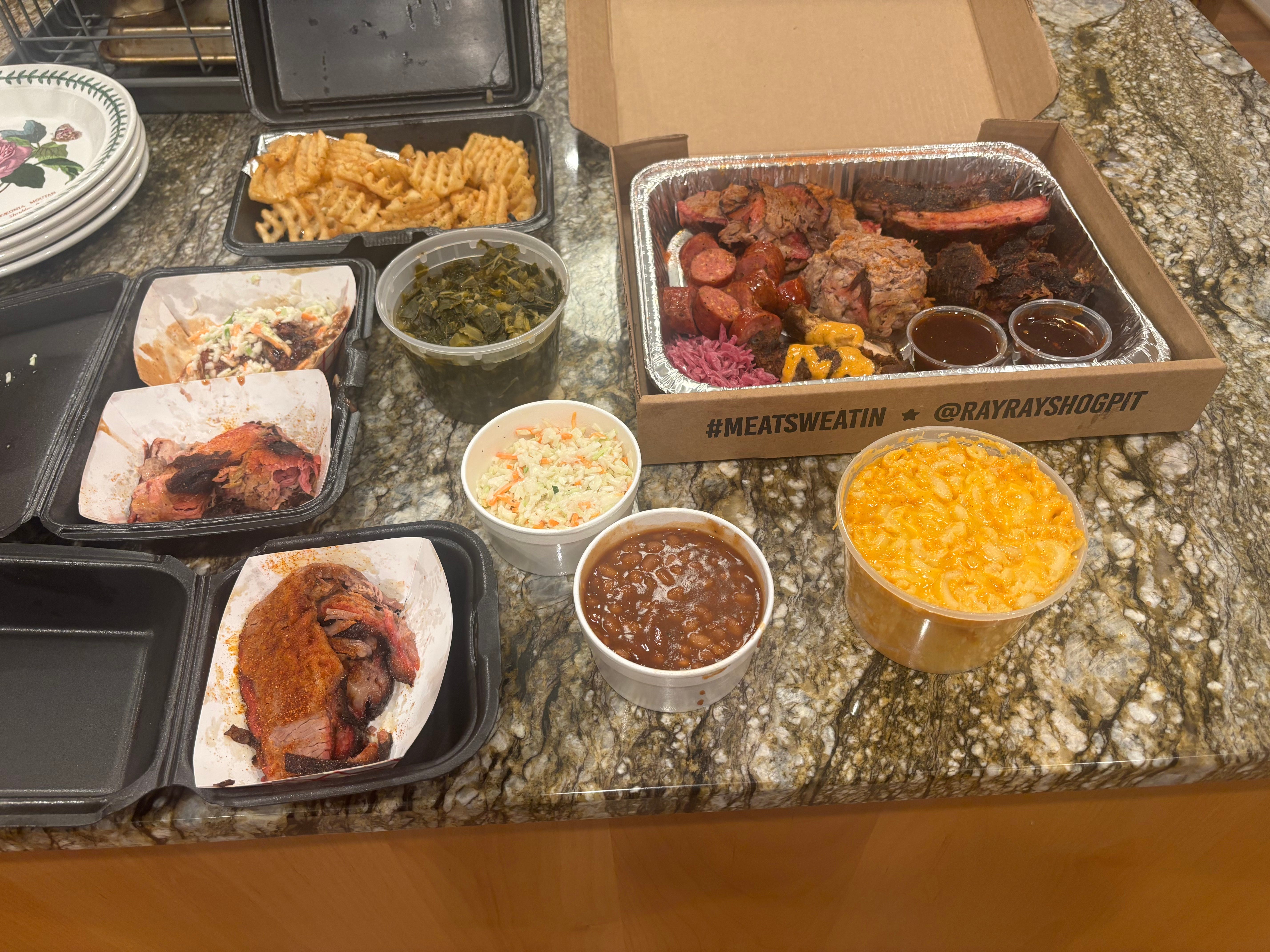
I visited by sister Ann in Columbus in November and we ordered carryout from this nearby food truck. This was the third location of Ray Ray’s I had tried over the years, all of which are no longer operating, but there are still four other active locations. The meats and sides were all excellent.
MEATSWEATS: What we do best, in a box. Smoked brisket, pulled pork, jerk chicken, dry rubbed ribs, and our own Ray Ray’s hot link, with pickles and sauce
Cauliflower Burnt Ends: Vegetarian smoked cauliflower with choice of spicy jerk or jalapeño BBQ sauce with red slaw
Pit Baked Beans
Mac & Cheese
Collard Greens
Cole Slaw
Waffle Fries
From the restaurant: Ray Ray’s Hog Pit is a family of stationary barbecue food trucks, trailers, and drive-thrus operating in multiple locations across central Ohio. Founded in 2009 by chef James Anderson, Ray Ray’s Hog Pit offers customers legendary barbecue. What makes us different is our love for American barbecue traditions and how we combine that old-school smoke with new-school magic. From the beginning our approach has attracted dedicated barbecue fans because they trust three things about Ray Ray’s:
Our consistent quality born from disciplined adherence to methods and patience.
We give them a genuine roadside barbecue experience.
We surprise them with awesome original items and menu collaborations.
Marvelous Musicians
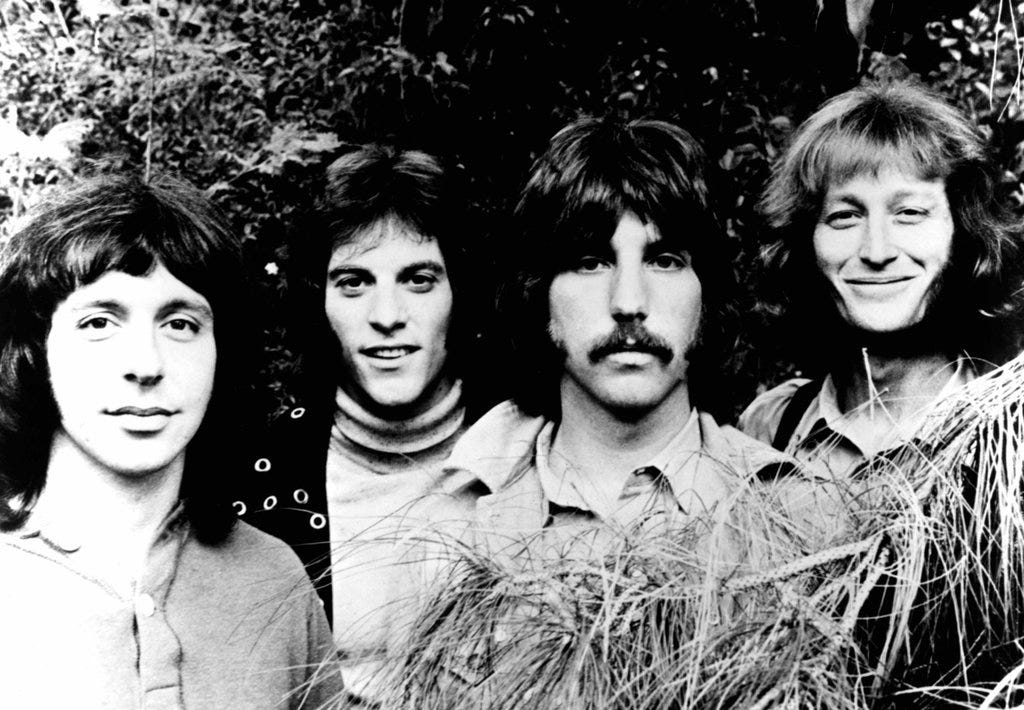
In 1967 I liked two versions of “Let’s Live for Today,” one by The Living Daylights and the hit version by The Grass Roots. My other Grass Roots favorites are “Things I Should Have Said,” “Midnight Confessions,” “Temptation Eyes,” and “Sooner or Later.”
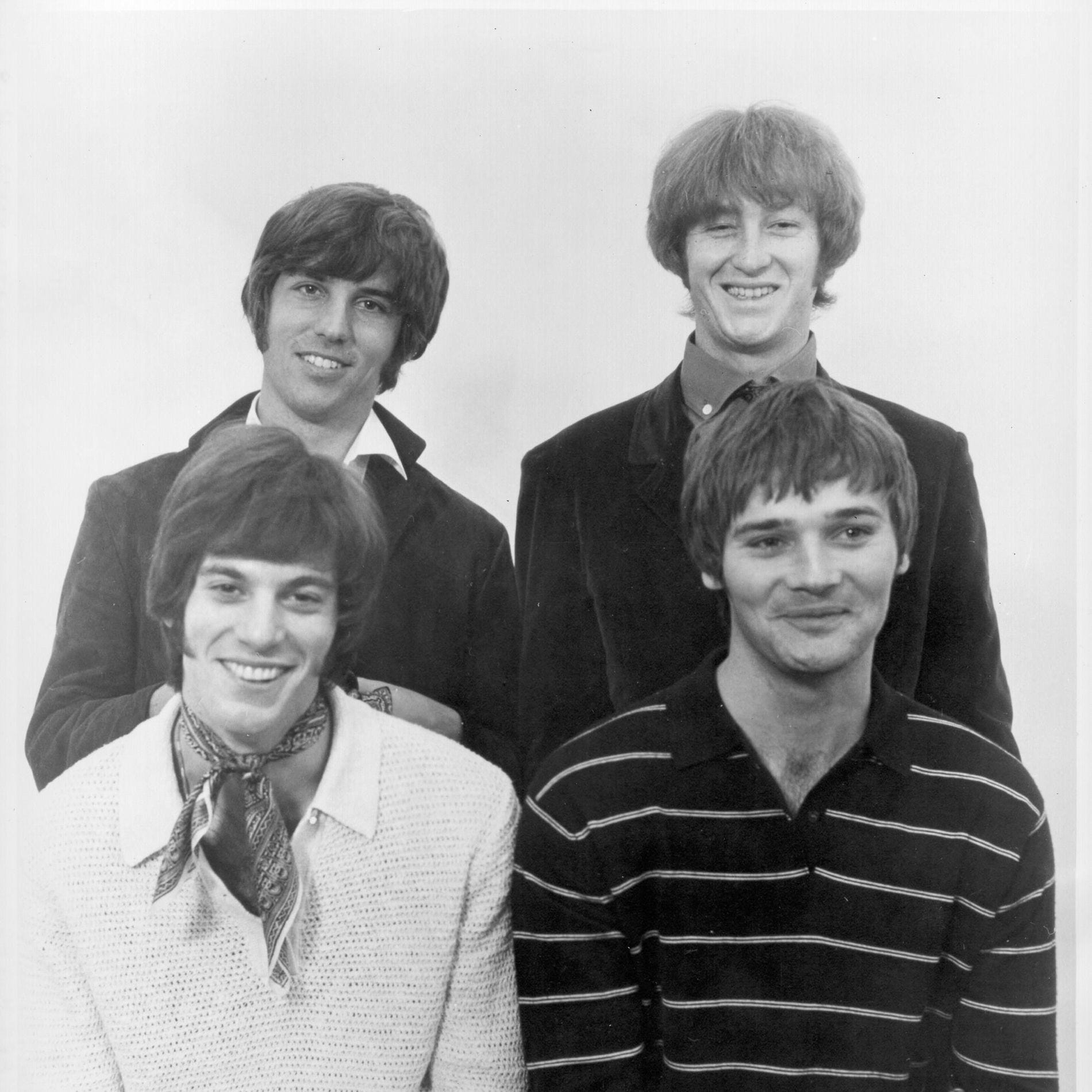
From Wikipedia: The Grass Roots are an American rock band that charted frequently between 1966 and 1975. The band was originally the creation of Lou Adler and songwriting duo P. F. Sloan and Steve Barri. In their career, they achieved two gold albums, two gold singles and charted singles on the Billboard Hot 100 a total of 21 times. Among their charting singles, they achieved Top 10 three times, Top 20 six times and Top 40 fourteen times. They have sold over 20 million records worldwide.
The group’s third — and by far most successful — incarnation was finally found in a Los Angeles band called The 13th Floor (not to be confused with the 13th Floor Elevators). This band consisted of Creed Bratton (vocals, guitar), Rick Coonce (drums, percussion), Warren Entner (vocals, guitar, keyboards) and Kenny Fukumoto (vocals, bass) and had formed only a year earlier. Entner, who had been attending film school at UCLA alongside future The Doors members Jim Morrison and Ray Manzarek, was drifting through Europe in the summer of 1965 singing and playing on street corners when he met fellow busker and American Creed Bratton in Israel, where an Israeli businessman expressed interest in managing and promoting them. The duo moved on individually, though, and ended up back in LA by 1966, where they formed the 13th Floor and submitted a demo tape to Dunhill Records. After Fukomoto was drafted into the army, the group went through two replacements before the label found singer Rob Grill, who had a voice that P.F. Sloan regarded as the perfect vehicle to convey his songs in a more commercially accessible manner than Sloan could with his own singing. Grill only played guitar, but had to quickly learn the rudiments of bass to fill that vacancy in the lineup. In 1967 the band was offered the choice to go with their own name or choose to adopt a name that had already been heard of nationwide.
In the beginning, they were one of many U.S. guitar pop/rock bands, but with the help of Barri and their other producers, they developed a unique sound for which they drew as heavily on British beat as on soul music, rhythm and blues, and folk rock. Many of their recordings featured a brass section, which was a novelty in those days among American rock bands, with groups like Chicago just developing.
The bulk of the band’s material continued to be written by Dunhill Records staff (not only Sloan and Barri) and the LA studio musicians who were part of what became known as the Wrecking Crew played the music on most, but not all, of their hits. The Grass Roots also recorded songs written by the group’s musicians, which appeared on their albums and the B-sides of many hit singles.
Robert Frank Grill (born November 30, 1943 in Los Angeles; died July 11, 2011 in Mount Dora, Florida) was an American singer, songwriter and bass guitarist, best known as lead singer and guitarist of the rock and roll group The Grass Roots.
The song that would become “Let’s Live for Today” was originally written by English musician David “Shel” Shapiro and Mogol in 1966, with Italian lyrics and the Italian title of “Piangi Con Me” (translated as “Cry with Me”). At the time, Shapiro was a member of the Rokes, an English beat group who had relocated to Italy in 1963 and had signed a recording contract with RCA Italiana the following year. During the mid-1960s, the Rokes became a popular band on the Italian charts, achieving a number of Top 20 hits with Italian-language covers of popular British and American songs. By 1966, however, the band had begun to write their own material, including “Piangi Con Me”, which quickly became their biggest hit to date in Italy.
Following its success on the Italian charts, plans were made to release “Piangi Con Me” in the United Kingdom and as a result, the song was translated into English and given the new title of “Passing Thru Grey”. However, the song’s publisher in Britain, Dick James Music, was unhappy with these lyrics and decided that they should be changed. Michael Julien, a member of the publisher’s writing staff, was assigned the task of writing new words for the song and it was his input that transformed it into “Let’s Live for Today”. Before the Rokes could release the song in the UK, however, another British group named the Living Daylights released a version of it. Ultimately, neither the Living Daylights nor the Rokes would reach the charts with their recording of the song.
In the United States, the Rokes’ version of “Let’s Live for Today” found its way to the head of Dunhill Records, who felt that the song would make a suitable single release for the Grass Roots. The composer/producer team of P. F. Sloan and Steve Barri, who managed the Grass Roots’ recordings, were also enthusiastic about the song, with Sloan being particularly enamored with the similarities that the song’s chorus had to the Drifters’ “I Count the Tears”. “Let’s Live for Today” was recorded by the Grass Roots, with the help of a number of studio musicians, including Sloan on lead guitar, and was released as a single in May 1967. The lead vocal on the Grass Roots’ recording was sung by the band’s bassist Rob Grill and the distinctive “1-2-3-4” count-in before the chorus was sung by guitarist Warren Entner.
The song quickly became popular with the record buying public, selling over two million copies in the U.S. and finally peaking at number 8 on the Billboard Hot 100 during June 1967. As well as being popular with domestic American audiences, “Let’s Live for Today” also found favor with young American men serving overseas in the Vietnam War, as music critic Bruce Eder of the Allmusic website has noted: “Where the single really struck a resonant chord was among men serving in Vietnam; the song’s serious emotional content seemed to overlay perfectly with the sense of uncertainty afflicting most of those in combat; parts of the lyric could have echoed sentiments in any number of letters home, words said on last dates, and thoughts directed to deeply missed wives and girlfriends.” Eder also described “Let’s Live for Today” by the Grass Roots as “one of the most powerful songs and records to come out of the 1960s.”
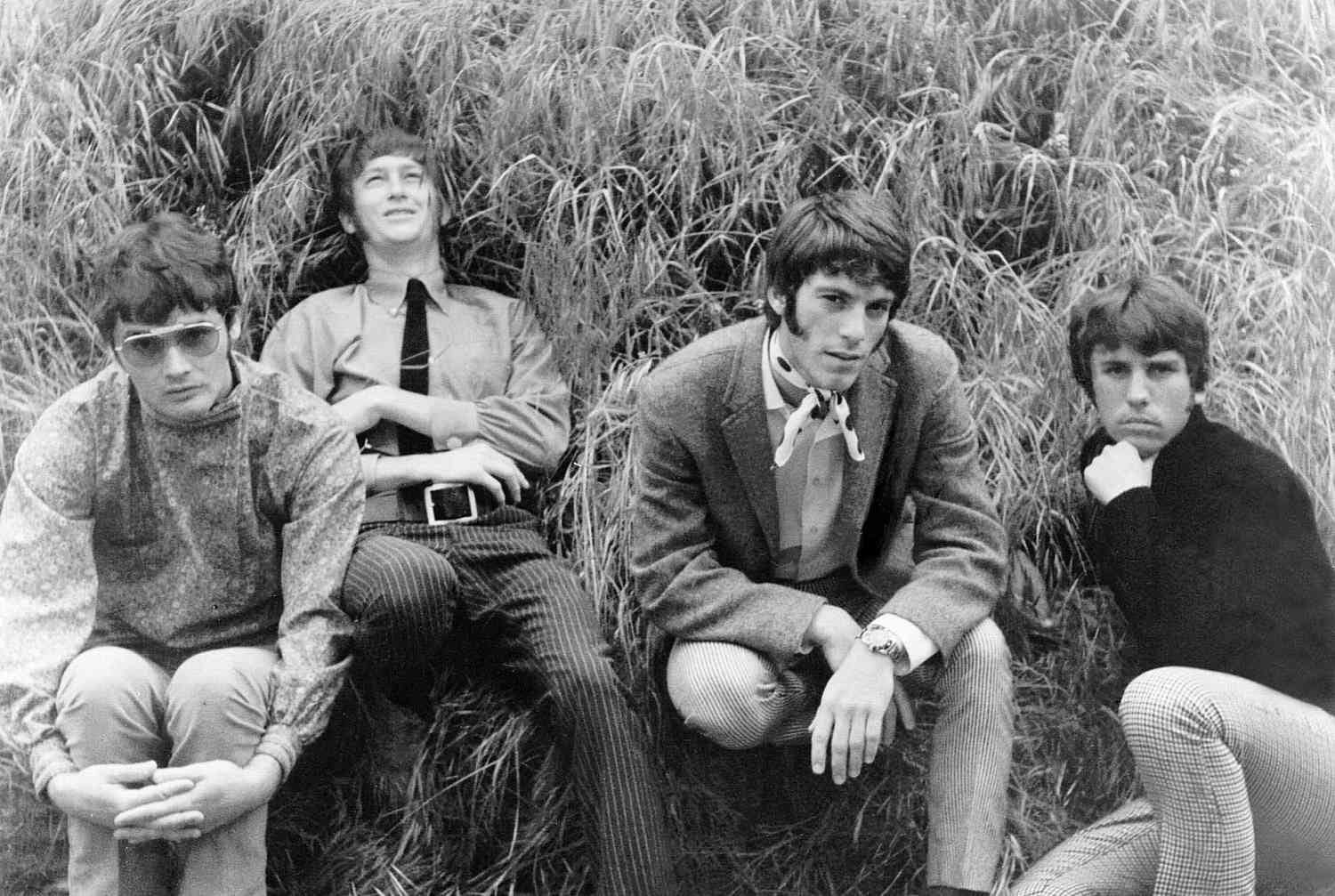
Medley (with Wait A Million Years)
My Playlist
Sports Star
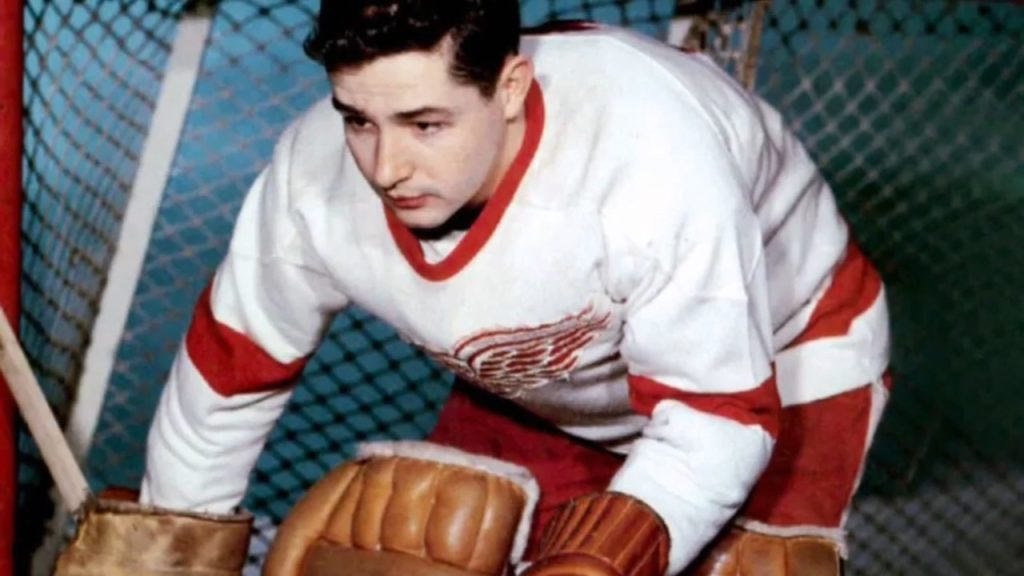
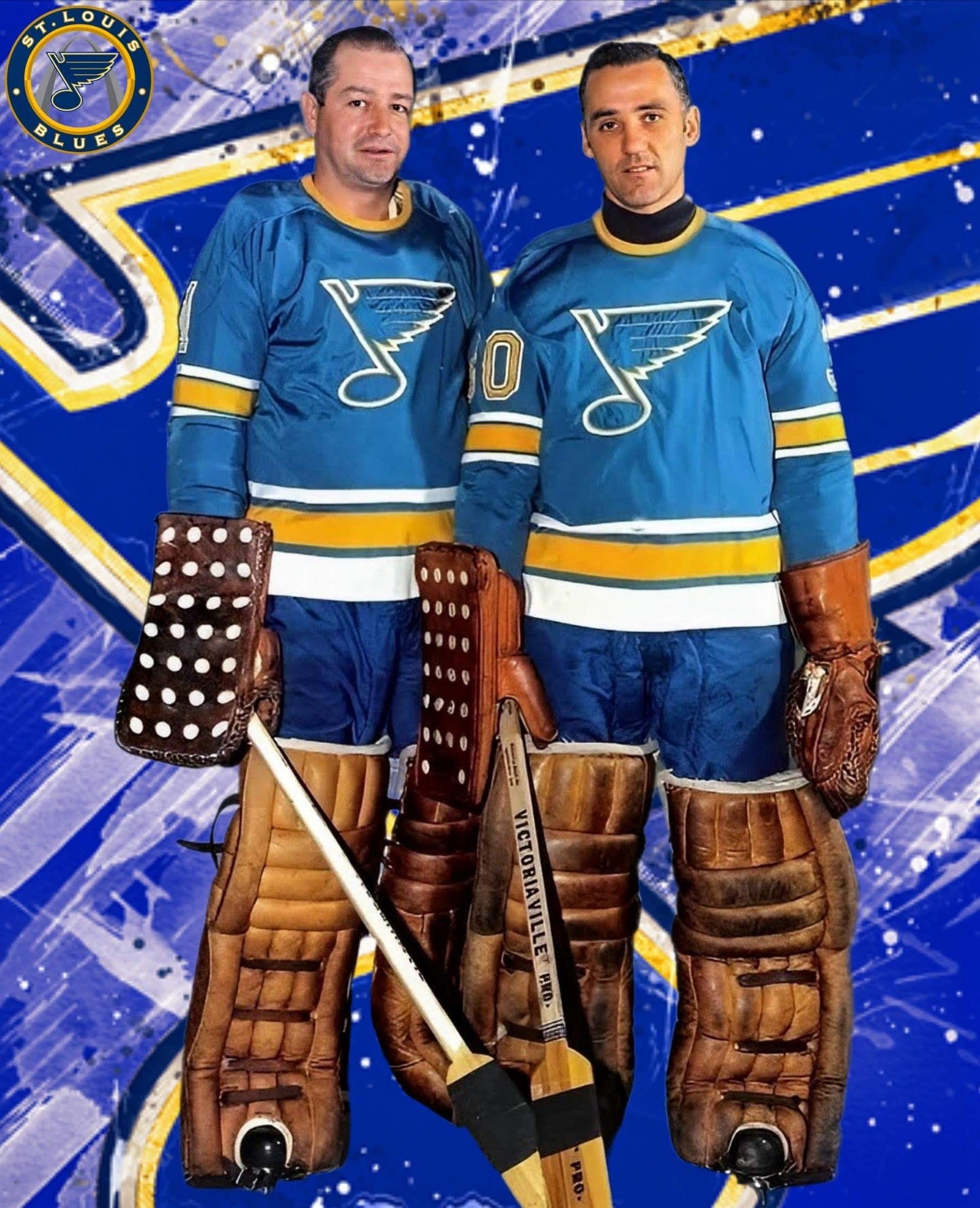
Glenn died on January 7, 2026. This comes on the heels of the deaths of Ken Dryden on September 5, 2025, Ed Giacomin on September 14, 2025, and Bernie Parent on September 21, 2025 — all great goaltenders. I remember when Glenn and Jacques Plante formed a formidable tandem for the St. Louis Blues in the late 1960s, leading the expansion team to three consecutive Stanley Cup Finals (1968-1970) and sharing the Vezina Trophy in 1969 while playing in the twilight of their careers.
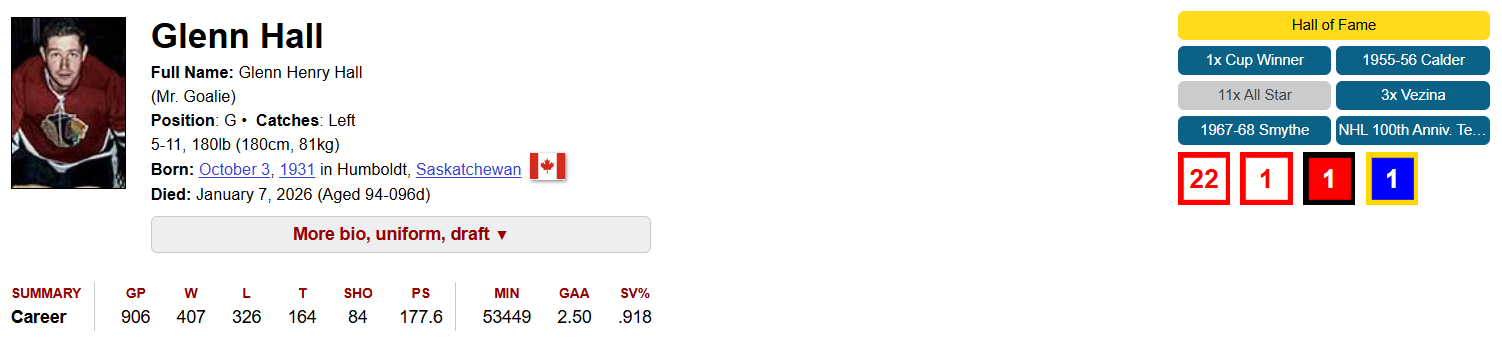
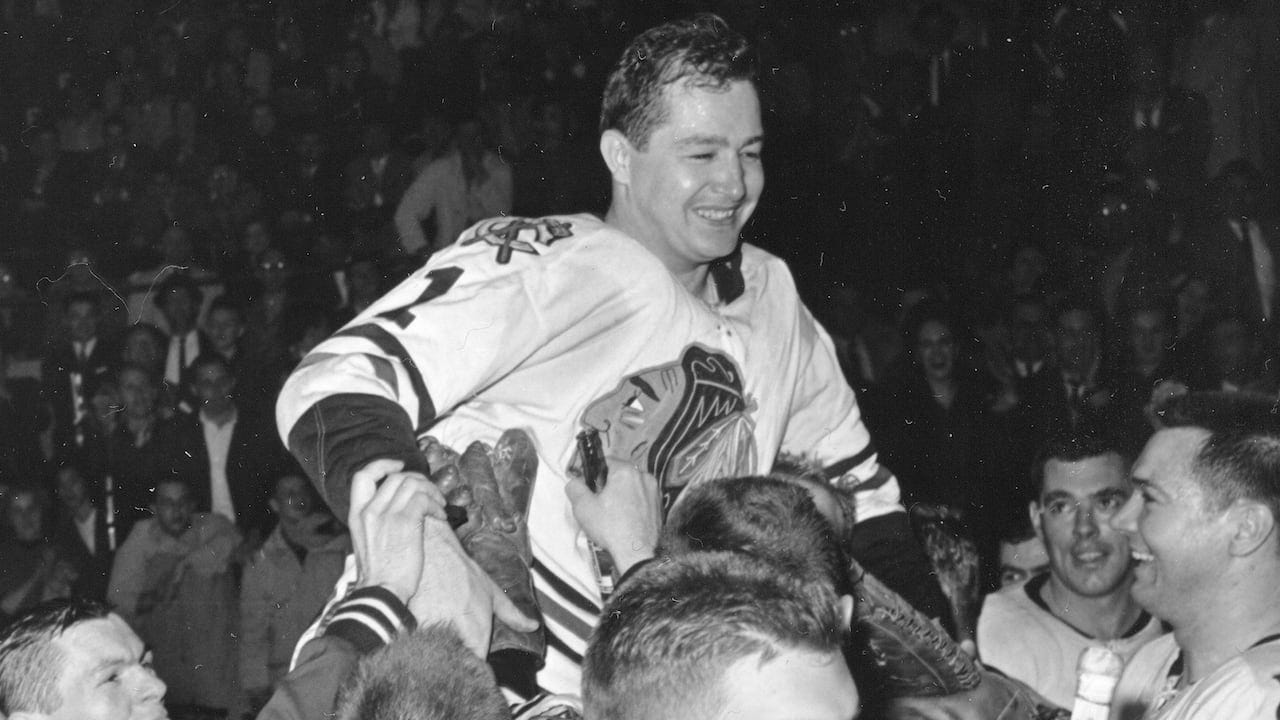
From Wikipedia: Glenn Henry Hall (born October 3, 1931 in Humboldt, Saskatchewan; died January 7, 2026 in Stony Plain, Alberta) was a Canadian professional ice hockey goaltender. During his National Hockey League career, which lasted from 1952 to 1971 with the Detroit Red Wings, Chicago Black Hawks, and St. Louis Blues, Hall set a record with 502 consecutive games played as a goaltender. He won the Vezina Trophy three times, was voted the first team All-Star goaltender seven times, and was awarded the Calder Memorial Trophy as best rookie in 1956. He also won the Stanley Cup with the Black Hawks in 1961. Nicknamed “Mr. Goalie”, he was the first goaltender to use the butterfly style. In 2017, Hall was named one of the 100 Greatest NHL Players in history.
Picture Pun
What in the Sam Hill is going on here?